
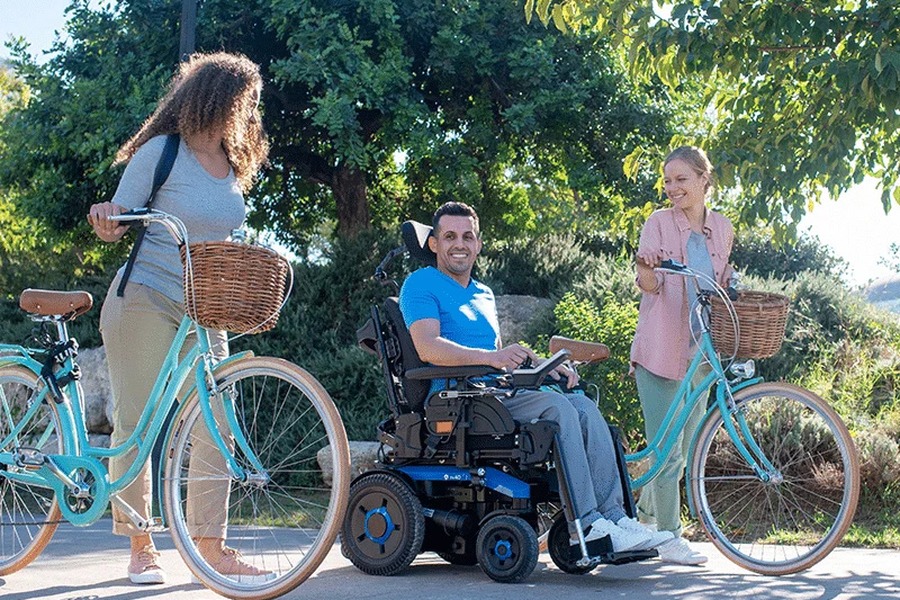
A power wheelchair does more than get you from one place to another. For many people, it’s what makes work, school, time with friends and everyday routines possible. The technology inside the chair plays a big part in how comfortable, safe and predictable those journeys feel.
Controls, electronics and batteries have come a long way, which means there are more ways to set up a chair around the person using it. The smartest choice is rarely the chair with the longest feature list. It’s the one that suits your abilities, your environment and the things you want to do.
Powered Mobility Has Moved Beyond Basic Steering
A power wheelchair is a set of systems working together: the controls, electronics, motors, batteries, seating and frame. Improvements in each of these give therapists and suppliers more room to tailor a chair to the person using it.
Two people using the same model may need quite different joystick positions, speed settings or seating. One person might need careful manoeuvring around a small home, while another needs reliable control across a large workplace or campus. A good assessment looks at those differences from the start.
Joystick Technology: Small Movements, Greater Control
For most users, the joystick is the part of the chair they know best. Many joysticks offer proportional control, so a small movement gives a gentle response and a bigger movement increases speed or turning. On programmable systems, a trained professional can also fine-tune how the chair responds.
An assessment should look further than whether someone can push the joystick. Can they reach it comfortably? Can they keep control as they tire, and stay accurate when turning, stopping or moving through a doorway?
Points worth discussing with your therapist or mobility specialist:
For example, the Invacare AVIVA RX Modulite from Medop CC lists a touchscreen remote and a range of specialist controls, including compact joysticks, head arrays and sip-and-puff controls, depending on configuration. Always confirm the specification and compatibility before ordering.
Smart Controls: Technology That Adapts to You
Not everyone can use a standard hand-operated joystick. Depending on the chair, alternative controls can include specially positioned joysticks, head controls, chin controls and switch-based systems. Some control systems can also operate powered seating functions, such as tilt, recline or standing.
Powered standing is a good example. The Phoenix Stand Up Power Wheelchair from Medop CC lets users move between sitting and standing, which can make it easier to reach shelves and counters or talk to people at eye level.
These options can make a real difference for the right person, but they need careful assessment, setup and training. A feature in a brochure isn’t automatically included with every chair, and it won’t suit everyone. Our article Driving Controls Explained looks at how to match the right control system to the user’s abilities.
Caregivers and clinicians matter here too. Clear instructions, a proper setup and a consistent response make everyday use safer and ongoing care easier.
Battery Technology: The Power Behind Independence
Batteries are at the heart of powered mobility. A published range is useful for comparing chairs, but it isn’t a promise of how far you’ll travel on every trip.
Real-world range depends on things like:
Different chairs use different battery technologies. For example, Medop CC lists a lithium battery for the Tian A9 folding power wheelchair and a lead-acid battery for the Glide Jumper. That’s why the right charger and care routine depend on the model and the battery it came with.
Follow the manufacturer’s charging instructions, always use the approved charger, and book a check if your chair suddenly takes longer to charge or doesn’t go as far as it used to. Charging tips for one battery type won’t necessarily apply to another. Medop CC’s wheelchair maintenance page has more on keeping your chair in good condition.
Driving Profiles: The Right Settings for Every Journey
Driving through a narrow kitchen is very different from heading down a long, open pathway. On chairs with programmable driving profiles, a technician can set up different combinations of speed, acceleration, deceleration and turning response.
A gentler, more controlled profile might suit indoor spaces, while another may work better on open paths outside. The aim is safe, predictable control in the places you go most, not simply more speed.
Profiles should always be programmed and tested by a trained professional, within the chair’s approved limits and with the user’s needs and environment in mind.
Why It All Starts With a Professional Assessment
A power wheelchair is a long-term decision, so the assessment should look at the full picture rather than one impressive feature. Think about transfers, posture, doorway widths, transport, access to charging and the surfaces the chair will cover most often.
Before comparing products, ask:
The answers show which technology will genuinely help and which might add complexity without solving a real need. They also make conversations with occupational therapists, physiotherapists and other healthcare professionals more productive.
Exploring Power Wheelchairs at Medop CC
Medop CC stocks power wheelchairs for a range of needs. A few examples show why matching features to the user matters:
These chairs aren’t direct substitutes for one another. Features, availability and the right configuration should always be confirmed with Medop CC, and a professional assessment is the best way to narrow down the options.
Technology That Fits Your Life
The best power wheelchair technology is the kind you hardly notice: a chair that responds the way you expect, works in your everyday spaces and helps you get on with the things that matter to you.
Whether you’re exploring powered mobility for the first time or reviewing an existing setup, the Medop CC team can help you understand your options and find a solution that fits.
Browse our power wheelchair range or contact the Medop CC team to talk through the right chair and setup for you.