
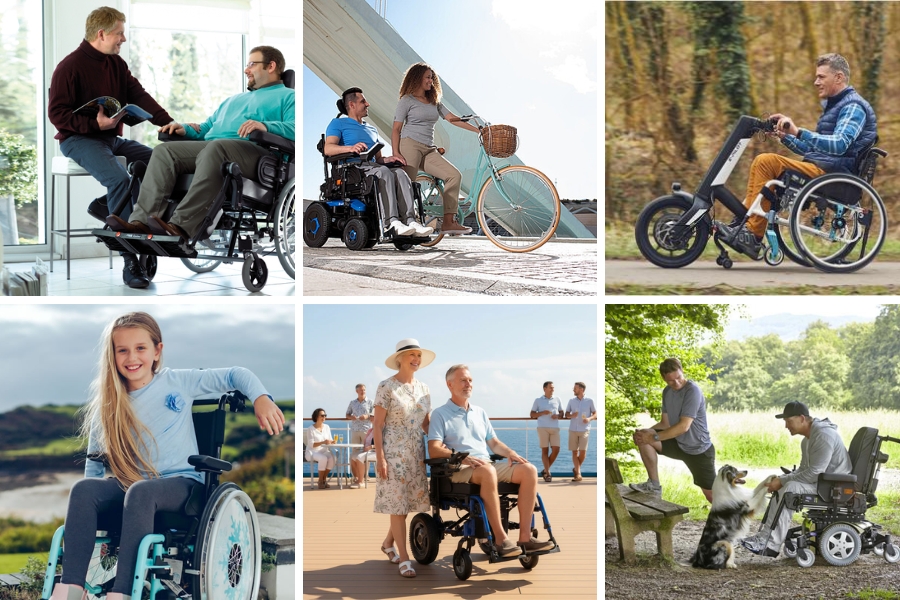
Choosing a power wheelchair is not simply about selecting a model. The right wheelchair depends on the individual’s diagnosis, posture, strength, endurance, environment, and long-term needs.
At Medop CC, we work with healthcare professionals and families to match the correct power wheelchair to each person. Some users may need a compact folding wheelchair, while others require advanced seating, standing functions, or alternative controls.
Understanding the diagnosis is the first step in finding the best fit.
Cerebral Palsy, Children & Teens
Children and teenagers with cerebral palsy often need more than basic mobility. Their power wheelchair should support posture, comfort, and development.
For cerebral palsy, the ideal power wheelchair may include:
• Supportive seating and pressure care cushions
• Tilt-in-space and recline
• Headrests, harnesses, and lateral supports
• Customised joystick, chin, or switch controls
As the child grows, the wheelchair should adapt too. A standing power wheelchair may also be beneficial in some cases, helping with positioning, circulation, and social interaction.
Many paediatric users benefit from a highly adjustable indoor/outdoor power wheelchair from brands such as Invacare.
Stroke Recovery
Stroke patients often have weakness on one side of the body, reduced balance, and limited endurance. A manual wheelchair may place too much strain on the stronger arm and shoulder.
For many stroke patients, the best option is a compact power wheelchair that offers:
• Easy joystick control
• Comfortable supportive seating
• A tight turning circle for indoor use
• Enough battery life for community outings
If the user still has some walking ability, a mobility scooter may be appropriate for longer distances. However, if posture or balance is affected, a power wheelchair is often the safer option.
Folding power wheelchairs are especially useful for South African families who need to transport the wheelchair regularly.
Spinal Cord Injuries
People with spinal cord injuries often rely on a power wheelchair as their primary mobility solution.
The ideal setup depends on the level of injury.
Higher-level injuries may require:
• Chin or head controls
• Tilt-in-space and recline
• Pressure relief seating
• Powered leg rests and positioning
Lower-level injuries may allow the use of a standard joystick and a more compact rigid power wheelchair.
For users who spend long periods in their wheelchair, pressure care and positioning are essential. Many of the indoor/outdoor models supplied by Medop CC are designed specifically for long-term daily use and can be customised with advanced controls and seating.
Muscular Dystrophy & Neurodegenerative Conditions
Conditions such as muscular dystrophy, multiple sclerosis, and motor neurone disease are progressive. This means the wheelchair needs to support both current and future needs.
The most suitable power wheelchair is often one that can be adapted over time with:
• More supportive seating
• Tilt and recline functions
• Additional head or trunk support
• Easier-to-use controls
In the earlier stages, some users may find that a mobility scooter provides enough support, particularly if they still have good posture and upper body strength.
Mobility scooters are often easier to transport and ideal for shopping centres, community outings, and shorter distances. However, as strength and posture change, a power wheelchair may become more appropriate.
Folding, Rigid, Standing or Scooter?
Choosing between categories can feel overwhelming, but there are some general guidelines:
The correct choice depends on the diagnosis and the user’s lifestyle.
How Medop CC Can Help
At Medop CC, we understand that no two users are the same. That is why we work closely with therapists, doctors, and families to recommend the right power wheelchair, seating, and controls for each individual.
We can assist with:
• Product recommendations
• Seating and posture support
• Alternative controls
• Quotations and medical aid documentation
• Long-term support and adjustments
The right power wheelchair can transform comfort, confidence, and independence. The key is matching the right chair to the right user.